St Helens Recycling Rates and Recycling Success, 2014–2015
St Helens Town Centre, 25/06/2015
St Helens Town Centre, 25/06/2015
Credit: St Helens First & St Helens Star
These cuttings document improvements in recycling across St Helens during 2014 and 2015.
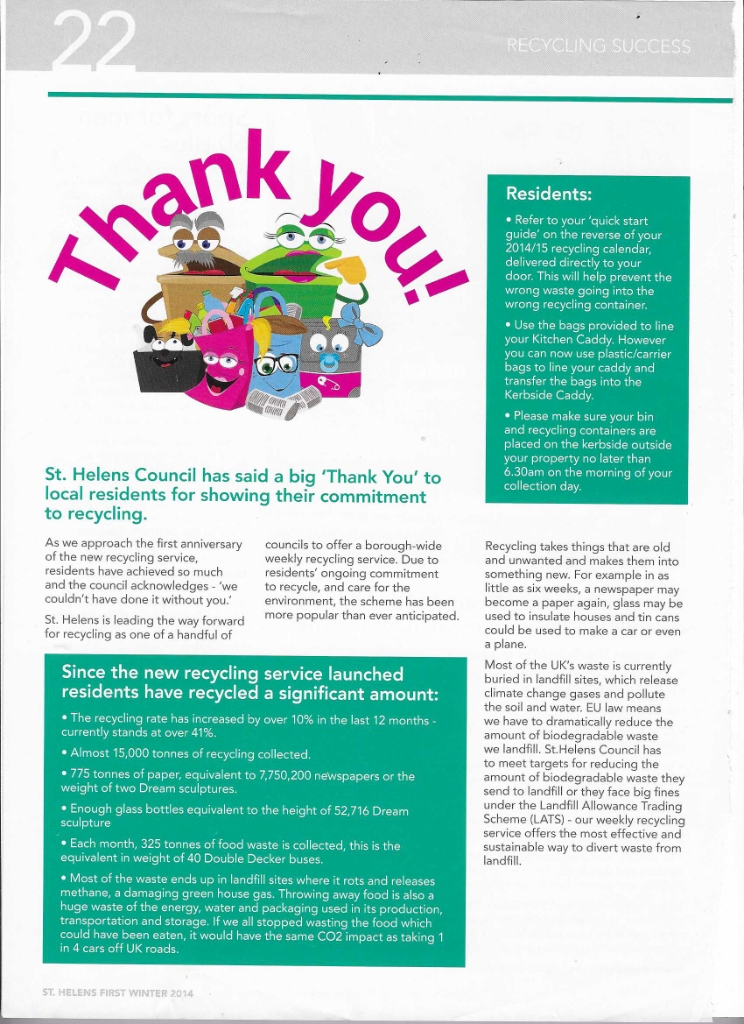
The Winter 2014 edition of St Helens First reported that the borough’s recycling rate had increased by more than 10% during the first year of the new weekly recycling service and stood at over 41%. Residents had recycled almost 15,000 tonnes of material, including 775 tonnes of paper, while around 325 tonnes of food waste was being collected each month.
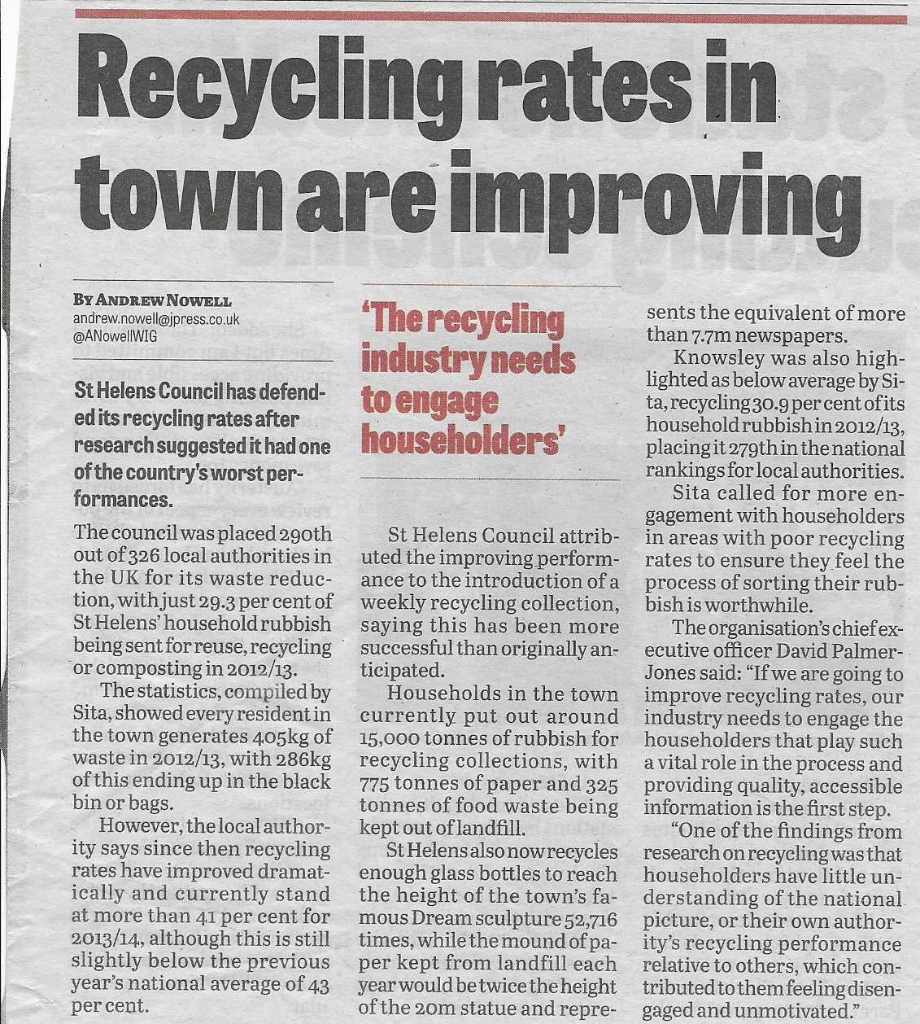
A further newspaper report recorded that St Helens had improved from recycling 29.3% of household waste in 2012–2013 to more than 41% in 2013–2014. Although the borough remained slightly below the national average at that time, the figures showed a significant improvement in local recycling habits.
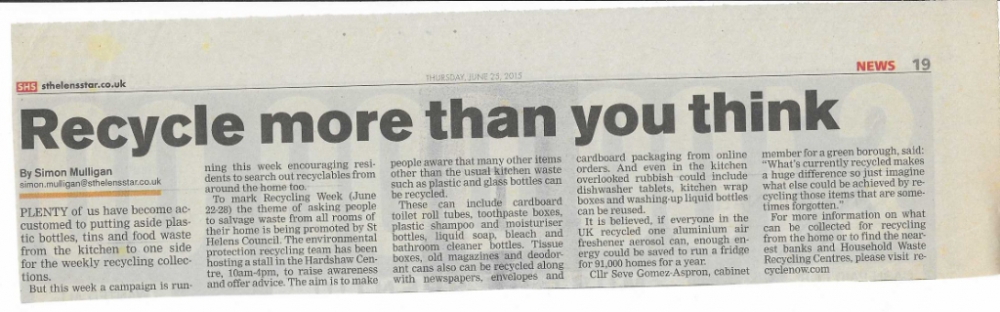
The St Helens Star article from 25 June 2015 encouraged residents to “recycle more than you think” by looking beyond ordinary kitchen waste. It highlighted recyclable items from bathrooms, bedrooms and other areas of the home, including toilet roll tubes, toiletry bottles, magazines, aerosols and cardboard packaging.
These reports provide the wider local context for the recycling education project delivered by UC Crew during 2014 and 2015. UC Crew used Hip Hop, drama, games and family recycling challenges to help children improve recycling habits at home and encourage adults in their families to take part.
By the end of the project, UC Crew had delivered 10 creative recycling workshops in schools, libraries and youth clubs across St Helens. The official project report recorded 414 people directly engaged and a further 848 people reached through wider activity, giving a total reported reach of 1,262 people.
The surviving report does not state exactly how many of the participants were children or how many individual schools took part. The articles also do not prove that UC Crew alone caused the borough-wide rise in recycling. However, they show that the project contributed to a wider period of environmental education, increased public engagement and improving recycling rates in St Helens.
The Winter 2014 edition of St Helens First reported that the borough’s recycling rate had increased by more than 10% during the first year of the new weekly recycling service and stood at over 41%. Residents had recycled almost 15,000 tonnes of material, including 775 tonnes of paper, while around 325 tonnes of food waste was being collected each month.
A further newspaper report recorded that St Helens had improved from recycling 29.3% of household waste in 2012–2013 to more than 41% in 2013–2014. Although the borough remained slightly below the national average at that time, the figures showed a significant improvement in local recycling habits.
The St Helens Star article from 25 June 2015 encouraged residents to “recycle more than you think” by looking beyond ordinary kitchen waste. It highlighted recyclable items from bathrooms, bedrooms and other areas of the home, including toilet roll tubes, toiletry bottles, magazines, aerosols and cardboard packaging.
These reports provide the wider local context for the recycling education project delivered by UC Crew during 2014 and 2015. UC Crew used Hip Hop, drama, games and family recycling challenges to help children improve recycling habits at home and encourage adults in their families to take part.
By the end of the project, UC Crew had delivered 10 creative recycling workshops in schools, libraries and youth clubs across St Helens. The official project report recorded 414 people directly engaged and a further 848 people reached through wider activity, giving a total reported reach of 1,262 people.
The surviving report does not state exactly how many of the participants were children or how many individual schools took part. The articles also do not prove that UC Crew alone caused the borough-wide rise in recycling. However, they show that the project contributed to a wider period of environmental education, increased public engagement and improving recycling rates in St Helens.
Item added : 31st July 2026
by Powered by Hip Hop
by Powered by Hip Hop


